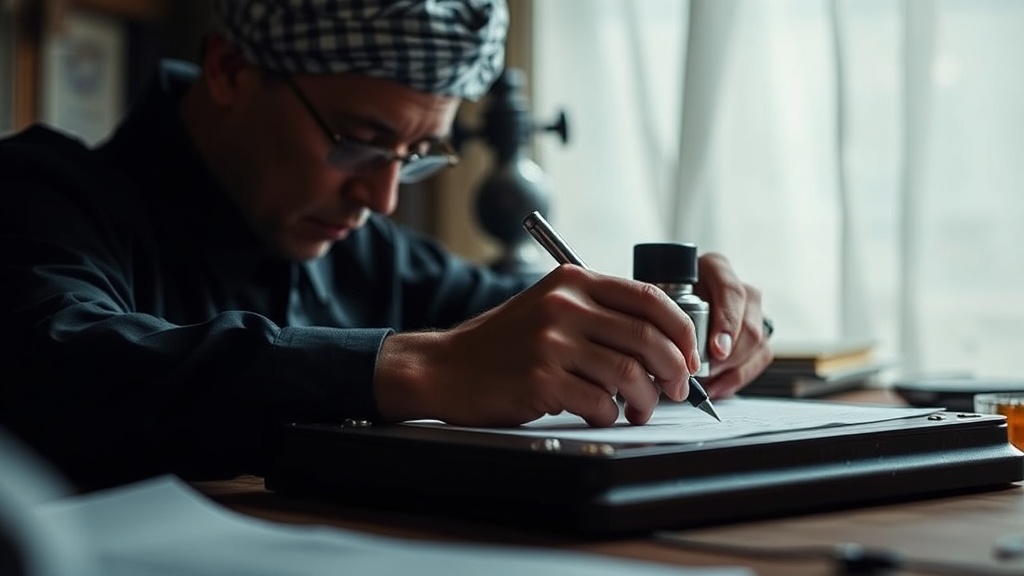
Why High-End Paper and Ink Longevity Matters for Collectors

The Misconception of Eternal Ink
Many collectors assume that once a signature is dry, it's permanent. They think a piece of paper, regardless of its composition, serves as a permanent vessel for an autograph. This is a dangerous mistake. The reality is that the interaction between ink chemistry and paper substrate is a constant, slow-motion battle. If you aren't paying attention to the material science behind your collection, you aren't just collecting history—you're collecting a ticking clock of degradation.
The quality of the paper—the weight, the fiber, and the pH level—determines how well a signature survives the decades. A ballpoint pen on cheap, acidic wood-pulp paper will look vastly different in twenty years than it does today. The ink might bleed, fade, or even cause the paper to become brittle and crack. Understanding these physical properties isn't just for academics; it's a fundamental requirement for anyone looking to maintain the value of their paper-based assets.
What Is the Difference Between Acid-Free and Acidic Paper?
When you're hunting for high-value autographs, you'll often hear the term "acid-free." It's a buzzword, but it carries real weight. Acidic paper, often made from groundwood pulp, contains lignin. Lignin is a natural component of wood that, when exposed to light and air, creates an acidic environment that turns paper yellow and brittle. This is the "old newspaper" smell and look that we all recognize.
For a serious collector, seeking out items on archival-grade, pH-neutral paper is a way to mitigate risk. If you're mounting an autograph, you shouldn't just stick it in any frame. You need to ensure the backing and the mounting materials are also acid-free. If you place a pristine autograph on a piece of acidic cardstock, that acid will eventually migrate into the autograph, causing discoloration and structural failure. You can learn more about the chemistry of paper through resources like the Library of Congress, which provides extensive documentation on historical preservation techniques.
| Paper Type | Common Use | Longevity Risk |
|---|---|---|
| Wood Pulp (Standard) | Mass-produced flyers, cheap books | High (Yellowing/Brittleness) |
| Acid-Free (Archival) | High-end certificates, art paper | Low (Stable) |
| Cotton Rag | Luxury stationery, premium documents | Minimal (Very Stable) |
How Does Ink Type Affect Signature Visibility?
Not all ink is created equal, and the type of pen used can change the fate of an autograph. We see three main categories in the world of signatures: ballpoint, felt-tip, and fountain pen. Each interacts with the paper fibers differently.
- Ballpoint Ink: This is often oil-based. While it's quite stable, it can sometimes sit on top of the paper rather than soaking in, making it prone to scratching if the surface is bumped.
- Felt-Tip (Permanent Marker): These are pigment-heavy. They provide a bold look, but they are highly susceptible to UV light. If you don't protect a Sharpie signature from sunlight, it can vanish or fade into a ghost of its former self.
- Fountain Pen (Liquid Ink): This is the most elegant but also the most volatile. The water or alcohol base in the ink can cause "feathering," where the ink spreads into the paper fibers like a blotch.
A collector's biggest enemy is light-induced fading. If you're looking at a signature that was written with a light-density ink, even a few months of indirect sunlight can ruin the legibility. You can check the stability of different pigments by researching the American National Standards Institute guidelines for material testing, though that's a deep rabbit hole for the most obsessive among us.
Can You Restore Faded Signatures?
The short answer is no. There is no "magic wand" to bring back the pigment once it has succumbed to UV damage or chemical reaction. While there are technical ways to clean paper, you should never attempt to "fix" a signature. Any attempt to manipulate the ink or the paper surface is more likely to destroy the item's value than to save it.
Instead of restoration, the focus must always be on prevention. If you see a signature starting to fade, it's a sign that your storage environment is failing. The goal is to keep the environment as static as possible. A change in the environment—even a slight shift in humidity or a new light source—can trigger a chemical reaction that accelerates the aging of the ink and the paper fibers simultaneously.
When you are evaluating a new find, look closely at the edges of the ink. Does the ink look integrated into the fibers, or does it look like it's sitting precariously on top? This can tell you a lot about the potential for future degradation. A signature that has already begun to bleed or feather is a red flag that the paper quality is insufficient for long-term preservation.
Maintaining a collection is a constant process of observation. You aren't just looking at the signature itself; you're looking at the medium it lives on. A piece of paper is a living, changing object. Treat it as such, and your collection will stand the test of time. If you're only looking at the name, you're missing the most important part of the equation: the material reality of the item.