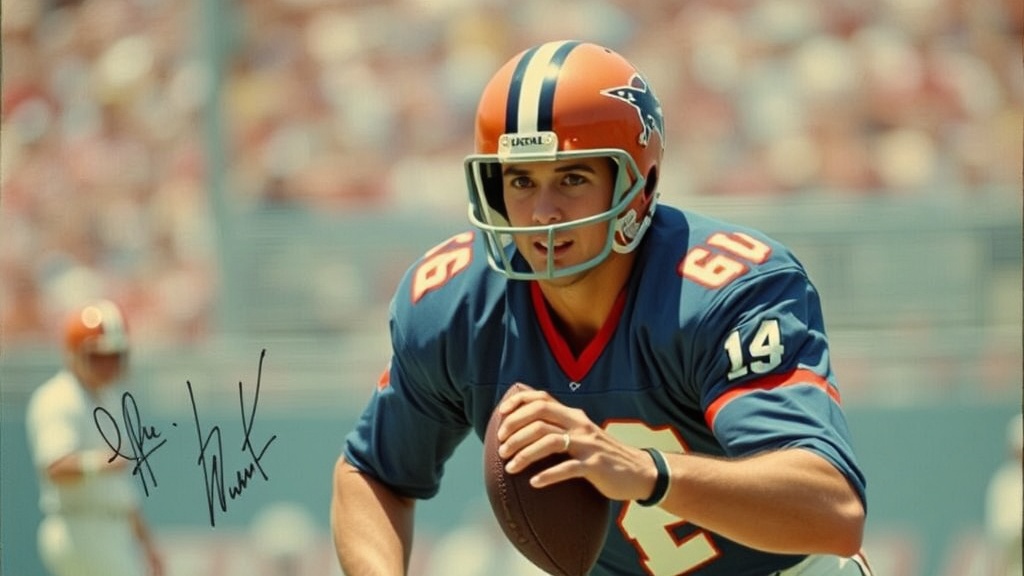
Spotting Real Signatures on Mid-Century Glossy Sports Programs

Identifying whether a signature on a 1950s sports program is real or printed comes down to understanding how ink interacts with clay-coated paper. You’ll learn the physical signs of a "live" signature—pooling, feathering, and pressure marks—that separate a souvenir from a genuine piece of history. Collectors often get fooled by high-quality period printing, but the physics of a pen on a glossy surface don't lie. When you’re holding a program from a 1952 Phillies game, you’re dealing with a specific type of paper stock that wasn't meant to last seventy years, let alone hold a signature.
These programs were printed on what’s called clay-coated stock. The coating gives the paper its shine and helps the printed images look sharp, but it creates a barrier for any ink applied later. This barrier is actually your best friend when it comes to authentication. Since the ink can’t penetrate the fibers easily, it has to dry on the surface. This leads to very specific visual markers that are nearly impossible for a printing press to replicate.
Why does ink skip on glossy sports programs?
One of the most common things you’ll see on a real signature from this era is "skipping." If you’ve ever tried to write on a waxy surface with a ballpoint pen, you know the frustration. The ball in the pen nib needs friction to rotate and dispense ink. On a slick, glossy program, that friction is inconsistent. You’ll see "railroading"—where the ink splits into two parallel lines with a hollow center—or places where the pen simply failed to leave a mark for a few millimeters. It’s a sign of a physical object struggling against a surface.
Printed signatures, on the other hand, are perfect. A printing press doesn't "skip" because it's applying a uniform layer of ink via a plate or a screen. If you see a signature that is perfectly solid and uniform across a glossy surface, that’s a massive red flag. Real life is messy. A player signing a program in a crowded stadium isn’t using a steady hand or a perfect pen. The skips and stutters are part of the story (and the proof). You can find more details on ink behavior through the Professional Sports Authenticator research archives.
How can you tell a printed signature from a real one?
The "tilt test" is the most effective tool in your kit. Take the program and angle it toward a light source. A printed signature is flat. It’s part of the paper. A real signature is an addition to the paper. You’re looking for sheen and depth. When ink dries on top of a coating, it often has a different reflective quality than the printed ink beneath it. Most stadium programs from the mid-century were printed using offset lithography. Under a magnifying glass, printed signatures will often show a dot pattern or at least a very uniform edge.
A real signature, especially one done with a vintage ballpoint or a fountain pen, will have ridges. Even on hard, glossy stock, the pressure of the pen leaves a physical indentation. You might not see it from the back—though sometimes you can—but from the front, the way the light hits the edges of the ink line will reveal if it’s sitting in a tiny trench. Also, look for ink pooling. This happens at the end of a stroke or where the player changed direction. The ink gathers in a tiny, dark glob. Printing doesn't pool; it lays down a controlled, even film. For historical context on player handwriting, the National Baseball Hall of Fame is an excellent resource.
What makes vintage program paper different from modern stock?
We often think of glossy as a modern invention, but the coatings used in the 1940s and 50s were quite different from the polymers we use today. Older coatings were often mineral-based, using things like kaolin clay. Over time, these coatings can become brittle or even slightly acidic. This affects how the ink ages. If you see a signature that has "haloed"—a yellow or brownish stain creeping out from the ink lines—it’s a sign that the ink and the paper coating have been having a chemical argument for a few decades. This chemical reaction is a great indicator that the signature has been there for a long time.
This aging process is nearly impossible to fake convincingly. A printed signature is locked into the paper’s original manufacturing process. It won't react the same way to the breakdown of the clay coating as a signature added years later would. Plus, vintage ballpoint ink had a different chemical makeup than modern ink. It was often oil-based and thick. On these glossy surfaces, it tends to stay tacky for a long time, which is why you often see old programs where the signature has "ghosted" or transferred a faint image onto the opposite page when the program was closed. You can learn more about paper degradation at the Library of Congress paper conservation guides.
Ghosting is often the smoking gun for authenticity. When a player signed a program and then immediately handed it back, the collector would often close the program before the ink was fully dry. This creates a mirror image—a ghost—on the opposite page. Because printed programs are dried at the factory before they’re ever bound and sold, you will never see a printed signature create a ghosting effect on the facing page. If you open a vintage program and see a faint, backwards version of the signature on the opposite leaf, you’ve found something special. It’s a literal snapshot of the moment the ink was wet.
Don't forget to check the context of the signature’s placement. Players usually signed in white space—the margins or the light areas of a photo. If you see a signature that is perfectly centered over a dark area but the ink looks suspiciously bright and legible, be careful. While some pens could handle dark backgrounds, most period-correct pens would struggle to stand out. Also, look for cracking. As the clay coating on old programs dries out and the paper is flexed, the ink on top will often develop tiny microscopic cracks. A printed signature, being part of the page, will flex with the paper without that same type of surface-level fracturing.
Lastly, consider the flow. Autographs are fast. A player isn't drawing their name; they’re signing it. On glossy paper, this speed usually results in tapering. The stroke starts thin, gets thicker as the pen hits its stride, and then tapers off to a sharp point as the pen is lifted. Printed signatures often have blunt ends because the printing plate can't replicate that lightning-fast lift-off. Get a jeweler’s loupe (a 10x magnification is plenty) and look at the ends of the letters. If the ink just stops without a taper, start asking questions. The transition from fountain pens to ballpoints in the late 1940s also changed the game. Fountain pen ink beads up on glossy stock—if you see a perfect, wet-looking fountain pen signature on a 1950s program, it might be a reproduction.
It sounds strange, but old programs have a specific scent—a mix of old paper, ink, and sometimes a hint of damp basement. But the ink itself? Sometimes, you can still catch the faint, metallic scent of the old oil-based ballpoint formulas if the program has been kept in a sealed environment. Printed ink, having been cured and dried as part of a massive batch, rarely carries that same individual chemical footprint. It’s these small, sensory details that help a collector move from guessing to knowing.