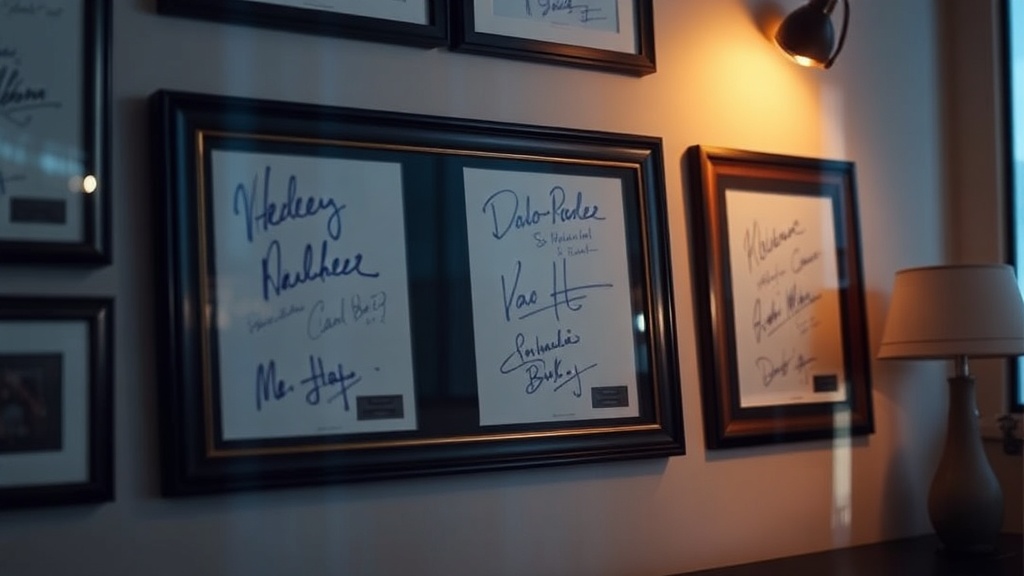
Should You Display Your Autographs in Frames or Keep Them Stored Flat?

You've just acquired a signed photograph of your favorite author—ink still dark, signature crisp, the moment of connection captured forever. Now you're standing in your study, holding it, wondering whether to slip it into a frame for daily enjoyment or tuck it away in an archival folder where light and dust can't reach it. This decision—display versus storage—shapes how long that signature remains vibrant and how much pleasure you actually derive from your collection. There's no universal answer, but there are clear factors that should guide your choice based on what you're collecting, your living situation, and how you want to interact with these pieces of history.
What's the Difference Between Archival Framing and Flat Storage?
Archival framing and flat storage serve the same fundamental purpose—preservation—but they approach it differently. Framing puts your autograph on display, protected behind glass or acrylic, mounted so the item stays flat and supported. Flat storage keeps signatures in acid-free folders, portfolios, or boxes, stacked horizontally in drawers or cabinets, away from light and environmental fluctuations.
The key distinction isn't just visibility—it's environmental exposure. A framed piece lives in your room's ambient conditions. Temperature swings, humidity changes, and light exposure all affect it continuously. Flat storage creates a buffered microclimate. Items in archival boxes experience slower shifts in temperature and humidity, and they remain in darkness unless you're actively reviewing them.
Both methods demand archival-quality materials. Regular cardboard backs off-gas acids that yellow paper within years. Standard glass offers no UV protection. Even "archival" products vary widely in quality—some use lignin-free board but skimp on adhesives or matting materials. When framing, you want conservation-grade matboard (cotton rag or purified wood pulp), UV-filtering glazing, and mounting methods that don't attach adhesive directly to your item. For flat storage, acid-free folders and boxes with buffered interiors neutralize environmental acids over decades.
How Does Light Exposure Affect Displayed Autographs?
Light damage is cumulative and irreversible. Photons break down ink molecules and bleach paper fibers, and this happens whether your autograph sits in direct sunlight or under household LED bulbs. The rate varies—direct sunlight destroys signatures in months, while indirect room light causes gradual fading over years. But the chemistry doesn't pause.
Fugitive inks are especially vulnerable. Early fountain pen inks, certain ballpoint formulations, and marker signatures fade faster than carbon-based or iron gall inks. A Sharpie signature on a glossy photo might look bold today but could ghost noticeably within five years of display. Water-based inks on porous paper fare better but still suffer from light exposure.
If you choose to frame, placement matters enormously. North-facing walls (in the Northern Hemisphere) receive the least direct sun. Interior hallways without windows offer even safer display zones. Avoid spots across from windows where reflected light hits your frame daily. And consider rotation—displaying different pieces for six-month intervals lets you enjoy your collection while limiting any single item's light dosage. Museums rotate exhibits for exactly this reason, though collectors can be more flexible with timing.
UV-filtering glass or acrylic helps, but it's not magic. These filters block most ultraviolet wavelengths, but visible light still causes damage over time. They also add cost—conservation-grade UV acrylic runs significantly more than standard framing glass. For irreplaceable items, the investment makes sense. For modern signatures you could replace, standard framing with careful placement might suffice.
When Should You Store Autographs Flat Instead?
Certain materials almost demand flat storage. Large format items—movie posters, broadsheets, oversized photographs—develop stress fractures when framed because their weight pulls against mounting points. Vintage documents on brittle paper risk tearing under their own weight in vertical displays. Items with existing damage—tears, flaking ink, insect holes—need the gentle, even support that horizontal storage provides.
High-humidity environments make flat storage preferable too. Framed pieces trap moisture against the glass during humid periods, creating perfect conditions for mold growth and foxing (those reddish-brown spots that stain old paper). Flat storage in buffered boxes allows better air circulation and humidity buffering, especially if you include silica gel packets that you refresh periodically.
Your collection size influences this decision as well. If you own three autographed items, framing them lets you enjoy them constantly. If you own three hundred, displaying everything becomes impractical—your walls would look like a restaurant, and you'd struggle to control environmental conditions across that many frames. Serious collectors typically adopt a hybrid approach: frame a rotating selection of favorites while keeping the bulk in archival storage.
For truly valuable pieces—museum-quality historical documents, rare literary manuscripts, items worth thousands—professional storage wins. The cost of proper flat storage is trivial compared to preservation framing, and the protection is superior. Institutions like the Library of Congress store their paper collections flat or in custom enclosures for good reason.
What Are the Best Materials for Either Method?
Whether framing or storing flat, material quality determines longevity. For frames, look for conservation-grade matboard with a pH above 7.5 and an alkaline reserve (buffering agents that neutralize acids). The mat creates space between your autograph and the glazing—essential because condensation can form where paper touches glass. Mounting should use corner pockets, polyethylene straps, or Japanese tissue hinges—not tape, glue, or pressure-sensitive adhesives.
Glazing options include regular glass, UV-filtering glass, acrylic, and UV-filtering acrylic. Regular glass is cheapest but offers no UV protection and shatters dangerously. UV glass protects against fading but still breaks. Acrylic (often called by the brand name Plexiglas) is lightweight and shatter-resistant, making it safer for large pieces and households with kids. UV acrylic combines both benefits at higher cost. Avoid non-glare coatings on glazing placed directly against your item—the texture can imprint onto paper over time.
For flat storage, acid-free folders and boxes are the baseline. Buffered materials (containing calcium carbonate) actively protect against environmental acidity. Unbuffered materials suit photographs and certain modern papers better—buffering can actually harm some photographic emulsions over long periods. Polyester sleeves (Mylar D) offer visibility while protecting against handling damage, though they can trap moisture, so they're best for climate-controlled spaces.
Interleaving tissue—thin, unbuffered acid-free paper placed between items—prevents ink transfer and abrasion when storing multiple autographs together. This matters more than most collectors realize. A sharp signature pressed against another document for years can emboss or offset onto the adjacent surface.
Can You Switch Between Display and Storage?
Absolutely—and you should. Treating display and storage as permanent categories misses the point of collecting. Your autographs are meant to be seen, studied, and enjoyed, not entombed. The key is managing the transitions carefully.
When moving an item from flat storage to a frame, let it acclimate to room conditions first. Cold paper brought into a warm room condenses moisture on its surface—that's when mold spores activate. Wait an hour. Handle the item with clean, dry hands or cotton gloves (though gloves can reduce tactile sensitivity, increasing fumbling risk). Inspect for any changes since last viewing—new spots, insect evidence, unfolding creases.
Returning a framed piece to storage requires similar care. Check that the storage location hasn't developed problems—water leaks, pest activity, temperature extremes that crept in over seasons. Refold interleaving tissue along existing creases rather than introducing new stress lines. And document the rotation in your collection records so you know which items have had recent display time.
Some collectors maintain "display candidates"—items they specifically acquire for framing while keeping rarities permanently stored. This approach works well for modern entertainment autographs or sports memorabilia where replacements exist. For historical documents or one-of-a-kind literary pieces, the calculus shifts toward protection over visibility. The American Institute for Conservation offers guidance on creating appropriate storage strategies based on item significance and condition.
Ultimately, your collection should bring you joy without causing anxiety. A well-framed autograph on your wall, properly protected and thoughtfully placed, gives you daily pleasure without reckless risk. A carefully stored archive gives you peace of mind and preserves options for future generations. Neither choice is wrong—only uninformed choices that lead to preventable damage. Know your materials, understand your environment, and build habits that let you live with your collection rather than around it.