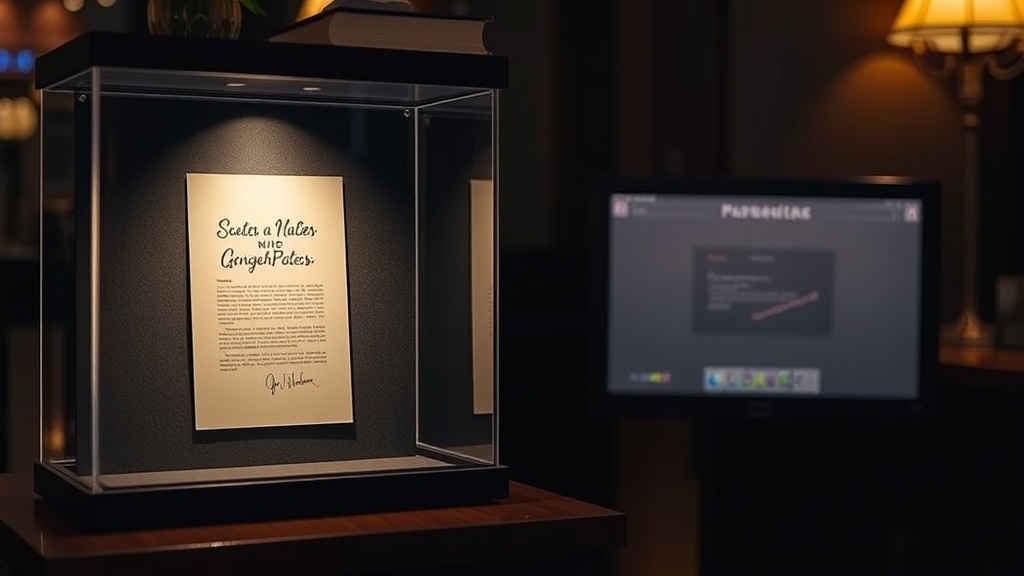
Creating a Safe Display Case for Autographed Paper

A collector spends years tracking down a specific 1950s baseball program signed by a Hall of Famer, only to find it yellowed and brittle after just two years in a standard glass frame. This happens because most people treat paper like a photo, forgetting that paper is an organic material that reacts to its environment. This post explains how to build or select a display case that protects against UV light, humidity, and physical degradation.
If you've ever looked at a vintage document and noticed the edges curling or the ink fading, you know the stakes. A display case isn't just a box; it's a barrier between your investment and the slow decay of the room around it. We'll look at materials, mounting techniques, and the specific environmental threats that ruin paper-based collectibles.
What Materials Should You Use for Autograph Displays?
You should use acid-free, archival-quality materials such as museum-grade matting and UV-filtering acrylic or glass. Standard cardboard and cheap wood frames contain lignin, which releases acid and turns your signed documents yellow. If you're displaying a high-value item, even a slight mistake in material choice can ruin the piece permanently.
When selecting a case, look for these specific standards:
- UV-Filtering Acrylic: Brands like Plexiglass offer high-grade sheets that block much more ultraviolet light than standard glass.
- Acid-Free Matting: Ensure your matting is labeled as "archival" or "acid-free." This prevents the "acid migration" that causes brown spotting.
- Polypropylene Sleeves: For items that aren't permanently mounted, use sleeves made of polypropylene rather than PVC.
The catch? Most "off-the-shelf" frames from big-box retailers are not archival. They often use cheap glue and acidic backing boards. You might think you're saving a few dollars, but you're actually inviting a slow-motion disaster for your autograph. Always check the fine print on the packaging for mentions of "acid-free" or "lignin-free."
If you're worried about how light affects your specific setup, check out our previous guide on lighting and your collection. It's a good starting point for understanding the invisible enemy.
How Do You Prevent Humidity Damage in a Display Case?
The best way to prevent humidity damage is to use a sealed, airtight display case equipped with desiccant packets. Paper is hygroscopic, meaning it naturally absorbs moisture from the air, which leads to warping, mold, and ink bleeding. If your display case isn't airtight, you're essentially just building a very expensive cage for a dying document.
I've seen collectors try to "seal" their cases with tape, but that's a mistake. A true archival setup requires controlled airflow or a controlled environment. Here is a breakdown of the common moisture threats:
- Ink Bleeding: High humidity can cause water-based inks to run or feather.
- Foxing: These are the reddish-brown spots that appear on old paper due to fungal growth or metal oxidation.
- Warping: Moisture causes the fibers in the paper to expand and contract, leading to permanent bends.
To combat this, many serious collectors use silica gel packets (desiccants) tucked into the corner of the frame. However, you can't just leave them there forever; they eventually saturate and stop working. You'll need to replace them or "recharge" them periodically. It's a bit of a chore, but it's better than finding a moldy mess in your display a year from now.
It's also worth noting that the room itself matters. Don't hang your display case directly above a radiator or near a window. Temperature swings are just as bad as constant humidity because they cause the materials to expand and contract rapidly.
How Much Does a Professional Display Case Cost?
A professional, archival-grade display case typically costs between $50 and $500 depending on the size and the level of UV protection required. While you can find cheap frames for $20, they often lack the protective qualities needed for long-term preservation. You are paying for the quality of the acrylic and the chemical stability of the mounting materials.
| Display Type | Typical Cost | Best For | Protection Level |
|---|---|---|---|
| Standard Retail Frame | $15 - $40 | Temporary display | Low (No UV/Acid-free) |
| Custom Shadow Box | $60 - $150 | Medium-value autographs | Moderate (UV-resistant) |
| Museum-Grade Case | $200 - $600+ | High-value/Investment | High (Total UV/Acid-free) |
The price jump from a $30 frame to a $200 museum-grade case might seem steep. But think about it this way: if you're displaying a signed piece of history, the frame is the insurance policy for that item. If you're using a high-end sleeve, you should also look into choosing the right sleeve to ensure the exterior protection matches the interior quality.
One thing to keep in mind is that "custom" often means "expensive." If you go to a local framer and ask for a custom build with museum-grade glass and acid-free mounting, expect to pay a premium. It's a worthwhile investment for a piece you never intend to take out of the frame.
Common Mistakes to Avoid
One of the biggest mistakes I see is using adhesive tape directly on the document to hold it in place. Never, ever do this. Even "archival" tape can leave a residue or damage the paper fibers if it's not handled correctly. Instead, use archival corners or specialized mounting strips that don't use permanent glue.
Another common error is using standard glass. Glass is heavy and can break, but more importantly, it doesn't block UV rays as effectively as specialized acrylic. If you're displaying something in a room with a lot of natural light, standard glass is basically a slow-motion oven for your autograph. The heat and light will bake the ink right off the page.
If you're just starting out, don't feel like you need to spend a fortune immediately. A simple, well-placed frame in a low-light area is a great start. As your collection grows, you'll naturally want to move toward more permanent, high-end solutions. Just remember that the goal is stability. You want the environment around your autograph to stay as boring and unchanging as possible.
For more tips on keeping your collection in top shape, you might want to read about shielding your signatures. It covers a lot of the foundational science behind why these materials matter so much.
The most important rule of thumb? If you wouldn't want it touching your skin or a piece of cheap cardboard, it shouldn't touch your autograph. Everything—from the glue to the backing—needs to be chemically inert. It's a small detail that makes a massive difference in the long run.
Steps
- 1
Select an Acid-Free Backing
- 2
Measure Your Frame Clearance
- 3
Secure the Item with Archival Corners
- 4
Seal the Perimeter Against Dust